Show us That Smile!

Pediatric Dental Services
Tooth Fillings
We are a mercury-free practice! A filling can be warranted for many reasons. The main reason a filling is needed is tooth decay. Your child will have their tooth “numbed” and then we will prep the tooth for the filling, and it is cured with light, making the tooth surface hard and strong. We refrain from using the words “shot or drill”. We use special words during this procedure like “putting the tooth to sleep” and “tooth whistle”, to make the children more comfortable in the dental chair.
When we “bond” a tooth, (if a part of the tooth is chipped or broken), the same procedure occurs.
Advantages of Tooth-Color Restorations
There are many advantages to tooth-colored restorations. Tooth colored composite is bonded to the teeth creating a tight, superior fit to the natural tooth. Such restorations can be used in instances where much of the tooth structure has been lost. The tooth remains intact and stronger.
Since the resin used in tooth-colored restorations contain fluoride this can help prevent decay. The resin wears like natural teeth and does not require placement at the gum line, which is healthier for your gums!
The result is a beautiful smile!
Extractions
Dr. King may determine that you need a tooth extraction for any number of reasons. Some teeth are extracted because they are severely decayed; others may have advanced periodontal disease, or have broken in a way that cannot be repaired. Other teeth may need removal because they are poorly positioned in the mouth (such as impacted teeth), or in preparation for orthodontic treatment.
The removal of a single tooth can lead to problems related to your chewing ability, problems with your jaw joint, and shifting teeth, which can have a major impact on your dental health.
To avoid these complications, in most cases, Dr. King will discuss alternatives to extractions as well as replacement of the extracted tooth.
The Extraction Process
At the time of extraction the doctor will need to numb your tooth, jaw bone and gums that surround the area with a local anesthetic.
During the extraction process you will feel a lot of pressure. This is from the process of firmly rocking the tooth in order to widen the socket for removal.
You feel the pressure without pain as the anesthetic has numbed the nerves stopping the transference of pain, yet the nerves that transmit pressure are not profoundly affected.
If you do feel pain at any time during the extraction please let us know right away.
Sectioning a tooth
Some teeth require sectioning. This is a very common procedure done when a tooth is so firmly anchored in its socket or the root is curved and the socket can’t expand enough to remove it. The doctor simply cuts the tooth into sections then removes each section one at a time.
After Tooth Extraction
After tooth extraction, it’s important for a blood clot to form to stop the bleeding and begin the healing process. Bite on a gauze pad for 30-45 minutes immediately after the appointment. If the bleeding or oozing still persists, place another gauze pad and bite firmly for another 30 minutes. You may have to do this several times to staunch the flow of blood.
After the blood clot forms it is important to not disturb or dislodge the clot. Do not rinse vigorously, suck on straws, smoke, drink alcohol or brush teeth next to the extraction site for 72 hours. These activities may dislodge or dissolve the clot and hinder the healing process. Limit vigorous exercise for the next 24 hours, as this increases blood pressure and may cause more bleeding from the extraction site.
After the tooth is extracted you may feel some pain and experience some swelling. An ice pack or an unopened bag of frozen peas or corn applied to the area will keep swelling to a minimum. Take pain medications as prescribed. The swelling usually subsides after 48 hours.
Use pain medication as directed. Call our office if the medication doesn’t seem to be working. If antibiotics are prescribed, continue to take them for the indicated length of time even if signs and symptoms of infection are gone. Drink lots of fluids and eat nutritious, soft food on the day of the extraction. You can eat normally as soon as you are comfortable.
It is important to resume your normal dental routine after 24 hours. This should include brushing and flossing your teeth at least once a day. This will speed healing and help keep your mouth fresh and clean.
After a few days you should feel fine and can resume your normal activities. If you have heavy bleeding, severe pain, continued swelling for 2-3 days, or a reaction to the medication, call our office immediately.
Dental Sealants
Highly effective in preventing decay on the biting surfaces of your chewing teeth, dental sealants are a simple procedure in which a tooth-colored acrylic “coating” is painted onto the surface of the tooth. This effectively “seals” the deep grooves, acting as a barrier and protecting enamel from plaque and acids.
Sealants protect the depressions and grooves of your teeth from food particles and plaque that brushing and flossing can’t reach.
Easy to apply, sealants take only a few minutes to seal each tooth. Sealants hold up well under the force of normal chewing and can last several years before a reapplication is needed.
Children and adults can benefit from sealants in the fight against tooth decay.

Space Maintenance
When your child loses a baby tooth at an early age, Dr. King might custom fit a small metal spacer called a space maintainer to reserve the mouth space and prevent extensive orthodontic treatments. This dental appliance will stabilize the remaining teeth and helps guide permanent teeth into position.
Without this treatment, nearby teeth move into the empty space, and the permanent teeth can come in crowded or crooked. Your child will completely adjust to the space maintainer in a few days.

Invisalign®
Straighten your teeth with clear aligners that are virtually invisible.
How is Invisalign® Different From Traditional Braces?
Invisalign® straightens your teeth just as effectively as traditional metal braces, but using a modern approach that is best suited for an active and social lifestyle. The clear plastic aligners are virtually invisible, so no one has to know they are there. And unlike traditional braces, they are removable! This makes it possible to brush and floss your teeth without the interference of brackets that can contribute to tooth decay. You can pop these clear braces out to eat and drink whatever you like with no food restrictions. Traditional braces use wires and metal that can poke and irritate your gums. Invisalign® is made of smooth plastic that is comfortable to wear. The convenience of Invisalign® appeals to people in all stages of life. Enjoy the significant benefits of improving your smile with minimal impact on how you look and feel.
How Does Invisalign® Work?
Invisalign® effectively corrects a wide variety of dental problems, including teeth that are widely gapped, overly crowded, or somewhere in between. Invisalign® treatment begins with a consultation to determine if you are a good candidate and to answer all of your questions. Not all dentists or orthodontists work with Invisalign®. We are specially trained providers who will develop an individualized treatment plan for your best results.
We’ll start with x-rays and impressions of your teeth to create a 3-dimensional image. Using this, we can map out the exact movements of your teeth and create a virtual image for you of how your teeth will look. Based on your individualized plan, a series of custom-made, clear aligners are made specifically for you. The aligners are made of BPA-free clear plastic and fit easily over your teeth. They are smooth and should be comfortable to wear. You can remove them to clean your teeth and to eat and drink. About every two weeks you will begin wearing a new set of aligners, progressing you through to your treatment goals. To make sure things are going well, you will have a check-up in the office every six weeks or so to monitor your progress.
How Long Will I Have To Wear Invisalign®?
While each case is unique, depending on the treatment needed, Invisalign® usually takes approximately one year for adults. For teens, the length of treatment is comparable to that of traditional braces. For fastest results, you should wear your aligners 20 to 22 hours a day. As you wear each set of aligners, your teeth gently and gradually shift into place. Once you have achieved the beautiful smile you desire, we may recommend retainers to keep your teeth looking good.
What About Special Occasions or Playing Sports?
Since Invisalign® is designed to be removable, it is perfectly fine to take out your aligners for a special night or event. Or if you play a contact sport that requires a mouth guard, you can simply replace your aligners with the mouth guard while you play. If your contact sport does not require a mouth guard, an extra advantage to Invisalign® is that it allows you to continue to wear your aligners without worrying about sharp brackets or wire ends cutting your mouth.
More than One Million Patients Worldwide Have Been Treated with Invisalign®. Call us for an appointment to get the smile you want without having to change a thing!
Being the parent of a child with special needs …
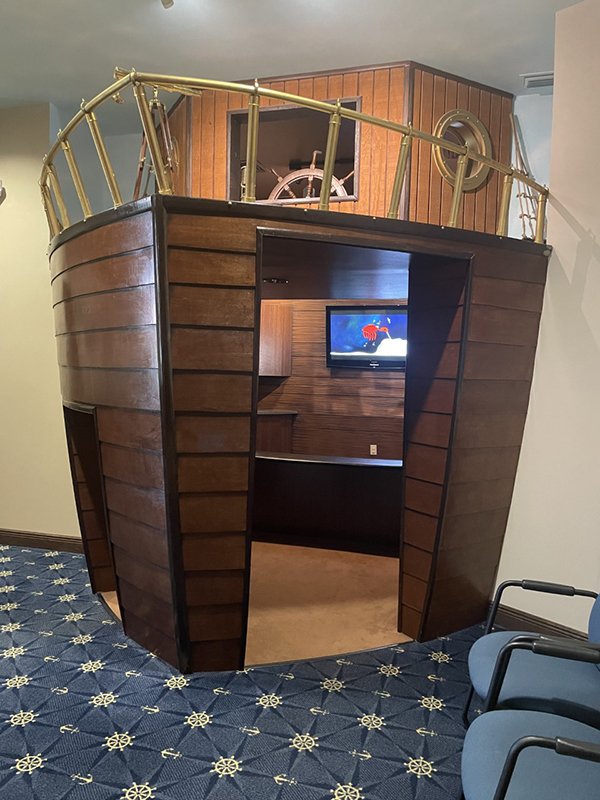
“Dr. King and his staff are amazing! My two children have had Dr. King as their dentist for many years and I truly would not take them anywhere else. Recently when we went in for an appointment we laughed with Dr. King that my kids are getting so tall their feet are going to hang off the exam chair! As a parent I find it comforting to go back with my kids when their names are called and get to sit with them during their appointment time. Dr. King has an amazing waiting room that kids love with a movie playing in a ship and a video game room! Being the parent of a child with special needs I find it hard to express how wonderful it is to go into a private room with my child to have his teeth cleaned. Now that my son is older he doesn’t mind going to the dentist but in those early years I was always nervous about taking him. I can say that Dr. King and his staff were always patient and kind. I loved hearing Dr. King’s “jingles or songs” because it helped to put everyone at ease and put a smile on our faces!”

A Great Office, A Great Team.


News From The Miles Of Smiles Blog